Itinerary
Day1 Arrival Kashgar
The bus sets off early in the morning for the 100km climb to Chinese frontier. The road crosses two mountain passes giving views over the Fergana range before reaching the top of the 3,752m Torugart Pass. This journey has been called 'the most exiting route into Central Asia'. At the top of the pass we say goodbye to our Kyrgyz guide and transfer to a Chinese bus for the descent into the Chinese province of Xinjiang. The landscape changes from dry dusty hillsides to irrigated, tree lined farmland on the 160km drive to Kashgar. (8-9hrs)
Day2 Kashgar
After two days on the road we have a full day to rest and look around this fascinating oasis city located on the historic silk route. Modern Kashgar is actually two cities which coexist in a sometimes surreal juxtaposition of the ancient and modern. During a full day of sightseeing we visit the Id kah Mosque, the Abak Hoja tomb, the old town and bazaar, the famous 'Sunday' market, and the sights of modern Chinese Kashgar including the huge statue of Mao towering above People's park.
Day3 Kashgar--Yilik
On this section of the journey we travel in 4-wheel drive cars - most likely Toyota Landcruisers. Driving south from Kashgar the road crosses a large level plain, following the historic trade route,early morning we drive to Yecheng ,short stop for final our paper works for on the roads , we leave the Kargilik the terrain becomes dry and dusty. The road climbs a dramatic series of hairpin bends to reach the summit of a 3,150m mountain pass, and then drops down the other side towards the Kudi river valley. After lunch the road follows the river valley rising relentlessly to the top of a 5,000m road pass. Another dramatic descent takes us to the army checkpoint at Mazar beside the Yarkand River. Here we leave the Xinjiang/Tibet highway and follow a dirt road into the mountains to reach our first campsite at Yilik located at the junction with the Surakwat river (10hrs) camping overnight.
Day4 Trekking Yilik to Sarak(Junction camp)
Morning Camels and camel man comes loading the equipment their own charges ,slow start treks moving to next camps
The terrain underfoot becomes more difficult as we follow the valley of the Surakwat river past the junction with the Zug Shagskam. Much of the walking is on smooth 'river washed' stones. High cliffs of river deposited conglomerate rise on either side of the narrow valley. After 5-6 hours we reach a small campsite on a terrace overlooking a tributary of the main river (3,800m).overnight at camps.
Day5 Trek Sarak to Kotaz
The valley turns into a narrow gorge in places as we follow the river higher into the mountains along a faint path made by the nomadic herders who visit this area in the summer months. We turn up a side valley to reach some abandoned mud and stone huts where we camp at a height of 4,330m below the Aghil pass. (5-6hrs)overnight at camps
Day6 Trek Kotaz to Quinghongtan - Crossing Aghil Pass
The ascent of the 4,870m Aghil pass is quite gentle and takes approx 3hrs. From the top there is a panoramic view of the great snow covered peaks of the Karakoram in the distance. The descent into the valley of the Shagskam river is straightforward. On reaching the silt laden river we ride the camels to reach the campsite on the other side. We camp in a grove of willow bushes at 3,950m, the only green in this dry landscape. (7-8hrs)overnight at camps.
Day7 Trek Quinghongtan to river junction camp
A slight drop in altitude today as we follow the Shagskam river downstream to the junction with the Sarpo Lago river. The river meanders across the 2km wide flood plan and we must cross it several times. If the level is low we can wade. High water levels (or a dislike of freezing water) can cause us to climb onto the camels. Camp is at 3,800m. (7-8 hrs).
Day8 Trek river junction camp to Sughet Jangal
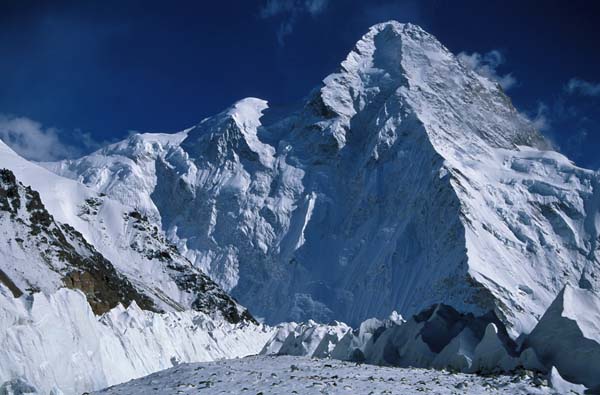
Shortly after leaving camp we get our first clear view of K2 as we climb a small shoulder above camp. It is then an easy walk south along the Sarpo Lago river valley to the green campsite at Sughet Jangal (3,900m). The crossing of the K2 river can add a little interest to the final part of this journey. (4 hrs)
Day9 Rest day at Sughet Jangal
This camping spot was used by Younghusband in 1887 and was the base camp site of Shipton's 1937 'Blank on the Map' expedition. It is now known as 'Chinese base camp' although expeditions attempting K2 from this side use several advance camps on the North K2 glacier. The North Face of K2 was first climbed by a Japanese team in 1982. Only a handful of mountaineers have tried to repeat their route, and few have succeeded.We spend the day packing and preparing for the trek to ABC, sorting supplies of food fuel and equipment.
Day10--11 Trek along the North K2 Glacier to ABC
Advance base camp' at 5,200m is more than 20km along the North K2 glacier from 'Chinese base camp'. We walk an average of 6-8 hrs each day and set up two intermediate camps. The first part of the trek uses reasonable paths while the later stages cross a variety of more difficult glacial terrain. The huge pyramid of K2 dominates the view ahead as we trek southwards, passing rows of giant ice pinnacles. ABC sits in a natural amphitheatre dominated by the near vertical North Face of K2.
Day12--Day 60 Climbing K2 peak
Day61 Advancebase camp –chinese base camp
Return to base camp complete the expeditions
Day62 --Day 66 Trek Sughet Jangal--Yilik ( base camp to Yilik)
All the group equipment is loaded onto the camels and we retrace the approach trek route along the Shagskam and Yarkand river valleys to reach Yilik.
Day67 Yilik to Kashgar
From Yilik we follow dirt roads out of the mountains, crossing two high passes to reach the town of Kargilik (Yecheng) on the plains. The following day involves a shorter journey on better roads and we reach Kashgar in the evening . hot shower ,overnight at Kashgar.
Day 68 Leave for Home
Morning transfer to Airport , if you leave to Kirgyzstan m, transfer Torugart Pass
Price incluses:
1.K2 Peak Climbing permit;
2. Millitary permit;
3.Liasion officer charge;
4.Ecology fee;
5.Mountain administrations fee;
6.camels;
7.Guide;(local guide for base camp on the trek)
8.Coock;
9. Food during trek and base camp;
10. Guide and cook meals;
11. Transportations;
12. Hotels;
13. Local staff accomodations.